Around two billion people don't have safe water at home. Filtering cloudy river water removes mud, but not germs. It is a first step, not the last. This is one of the UN Sustainable Development Goals. Goal 6: Clean Water and Sanitation (United Nations)
Why does this matter?
Phones and electric cars use lithium batteries. In Bolivia, lithium is collected from salty water by letting the Sun evaporate it in huge ponds. This is one of the UN Sustainable Development Goals. Goal 9: Industry, Innovation and Infrastructure (United Nations)
Some dyes are banned in food. Scientists split a food colour into its dyes and compare it with the banned one, to check.
What is a mixture?
A is when two or more substances are together, but each one stays the same. Nothing new is made, so you can separate them again.
- Sand and water: a mixture.
- Salty water: also a mixture, even though it looks clear.
- Click any underlined word on this page to see what it means.
Key words
Sieving
Sorts solid pieces by size.
How it works
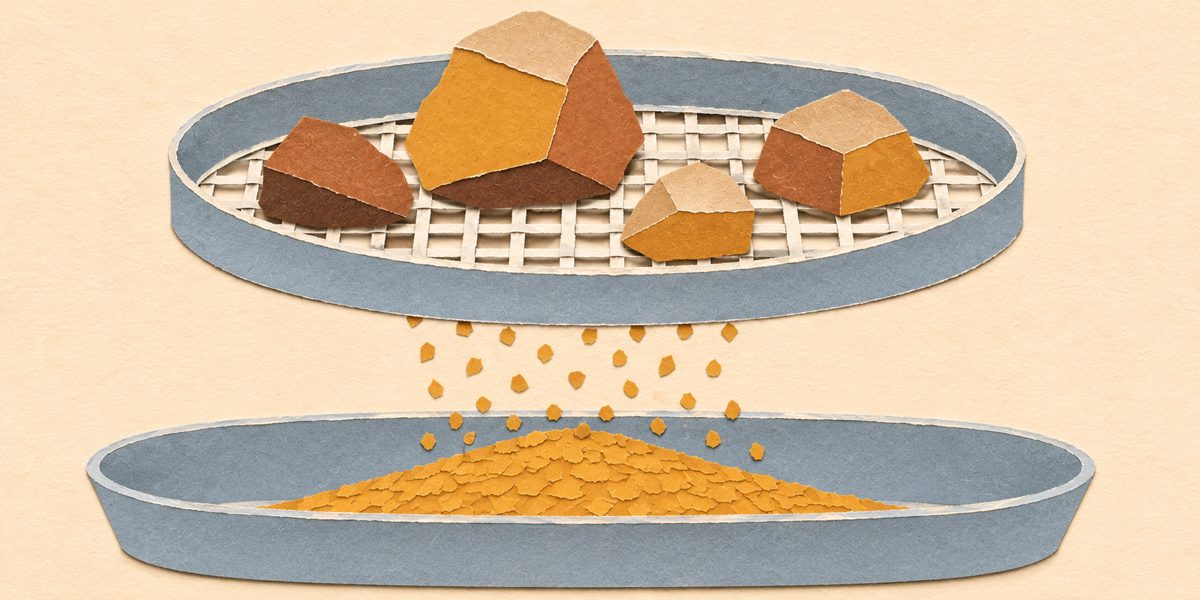
A sieve has holes. Small pieces fit through the holes and fall. Big pieces cannot, so they stay on top.
When to use it. Both parts are solid and one is bigger.
Method · do these steps in order
- 1
Pour the mixture onto the sieve
- 2
Shake it
- 3
Small pieces fall through
Quick check Why can't sieving separate salt from sand?
Filtration
Catches a solid that hasn't dissolved.
How it works
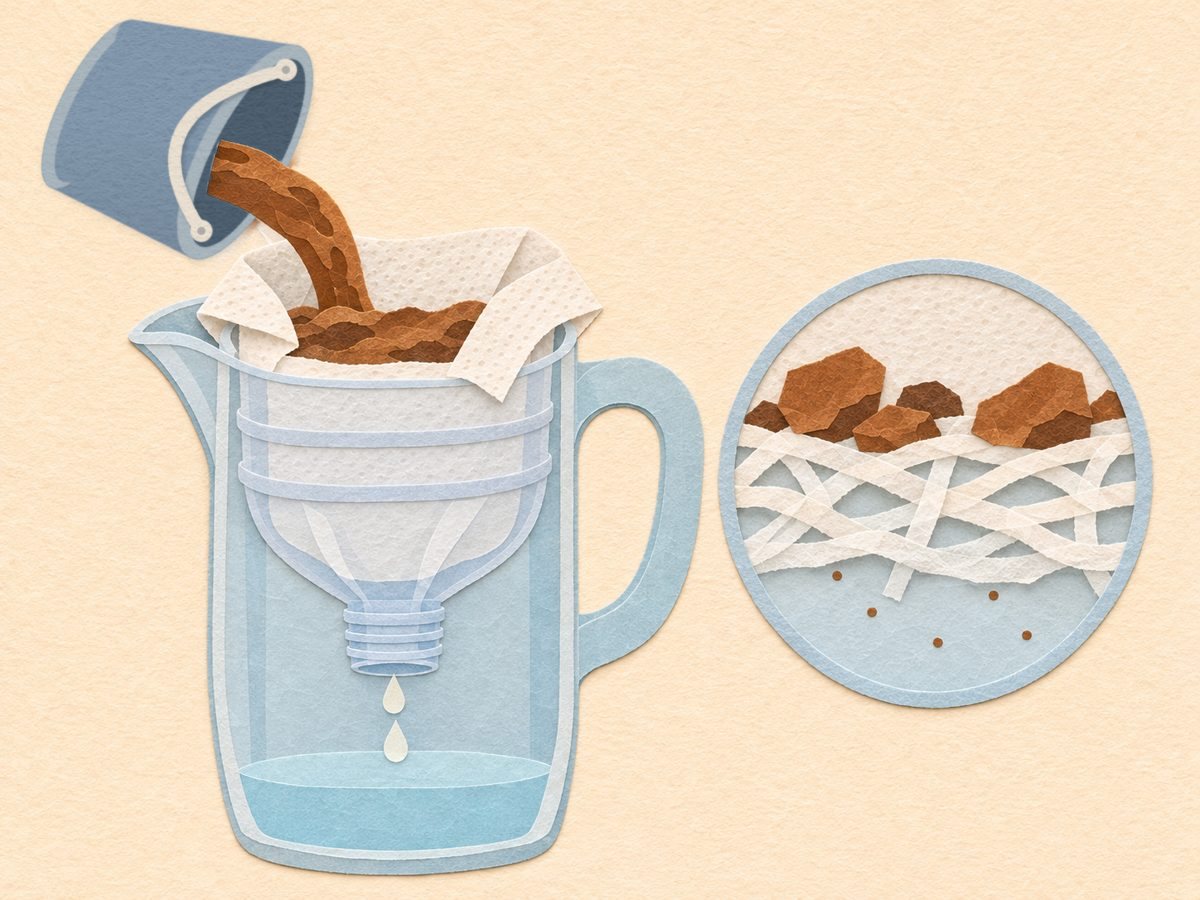
Filter paper has tiny holes. Water, and anything dissolved in it like salt, passes through. Solid pieces that have not dissolved are too big, so they get caught.
When to use it. A solid hasn't dissolved in a liquid, like sand in water.
Method · do these steps in order
- 1
Put filter paper in a funnel
- 2
Pour the mixture in
- 3
The drips through, the stays
Stretch
Real water-treatment plants use layers of sand and gravel, and then membranes with extremely tiny pores. The smaller the pores, the smaller the things caught, but the more pressure it needs.
Quick check Chalk powder and water are filtered. What is the residue?
Evaporation
Gets a dissolved solid back.
How it works
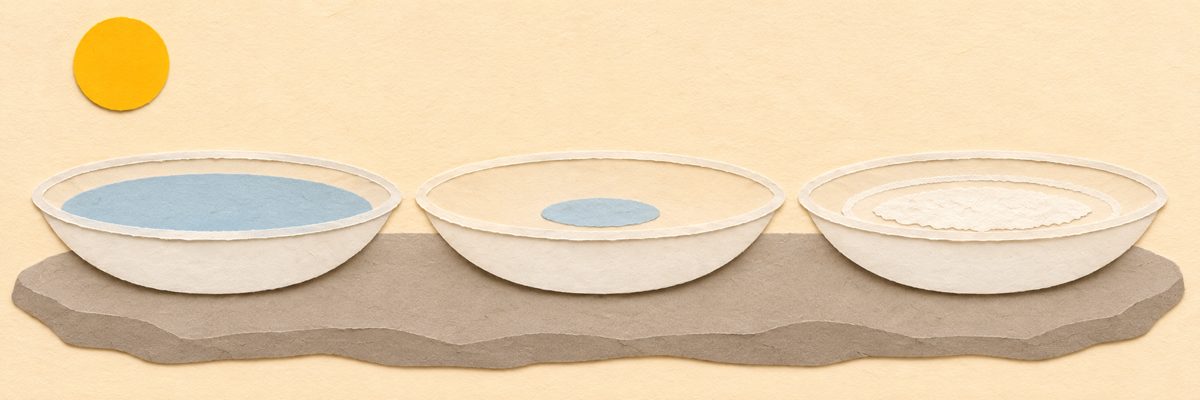
Heat makes water escape into the air as . The dissolved solid can't escape, so it's left behind.
When to use it. You want the dissolved solid, not the liquid.
Method · do these steps in order
- 1
Pour the into a dish
- 2
Warm it, or leave it in the Sun
- 3
Dry solid is left in the dish
Quick check What happens when salty water is evaporated?
Simple distillation
Collects the liquid from a solution.
How it works
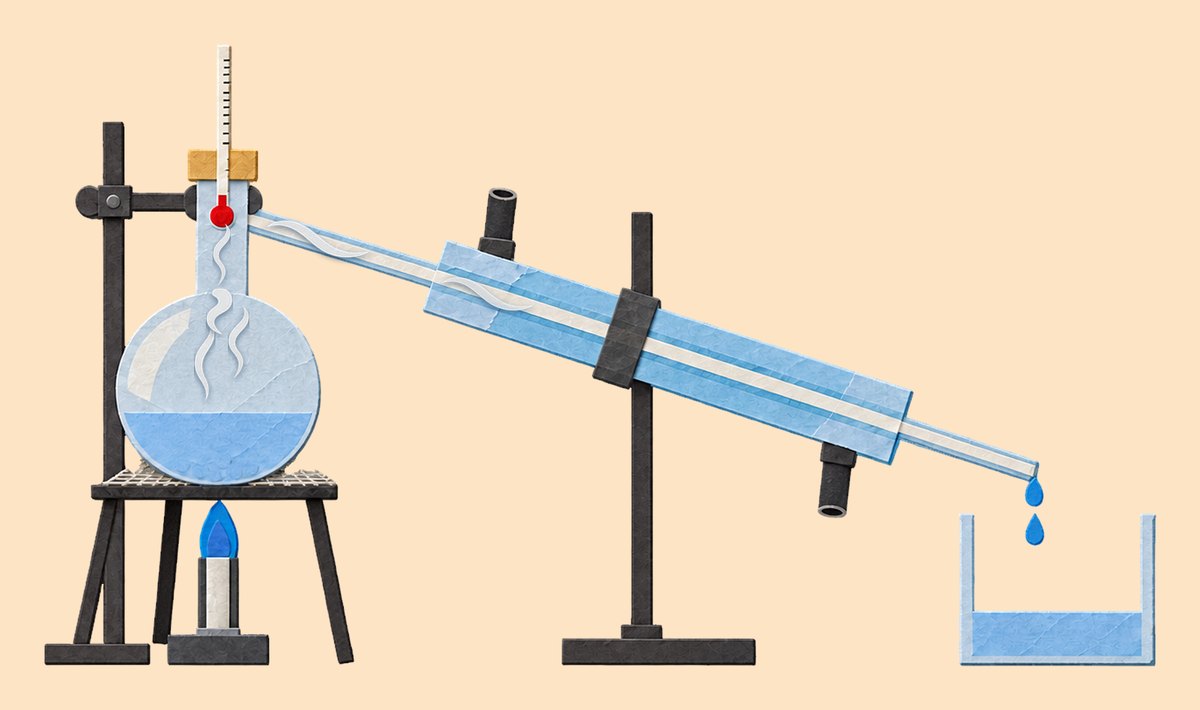
Heat the solution until the liquid boils. Cool the in a so it turns back into a liquid. Dissolved solids stay behind.
When to use it. You want the liquid, like pure water from salty water.
Method · do these steps in order
- 1
Heat the salty water in the flask
- 2
The water boils and turns into . The salt stays in the flask
- 3
The vapour goes into the , where cold water flows around it
- 4
The vapour cools and into pure water. It drips into the beaker
Stretch
Fractional distillation separates liquids with close boiling points, like ethanol (78 °C) and water (100 °C). It is how crude oil is split into petrol and diesel. Many modern desalination plants use membranes (reverse osmosis) instead of distilling.
Quick check Which part turns the vapour back into a liquid?
Chromatography
Splits dissolved substances, like the dyes in ink.
How it works
Water climbs up the paper and carries the dissolved dyes with it. A dye that sticks weakly to the paper travels far, and a dye that sticks strongly stays low, so the colours separate.
When to use it. You want to see which dyes are mixed together, for example to check a food or drink for a banned dye.
Method · do these steps in order
- 1
Draw a pencil line near the bottom of the paper
- 2
Put a small spot of ink on the line
- 3
Hang the paper in a little water, with the line above the water
- 4
Wait. The water climbs the paper and the dyes separate
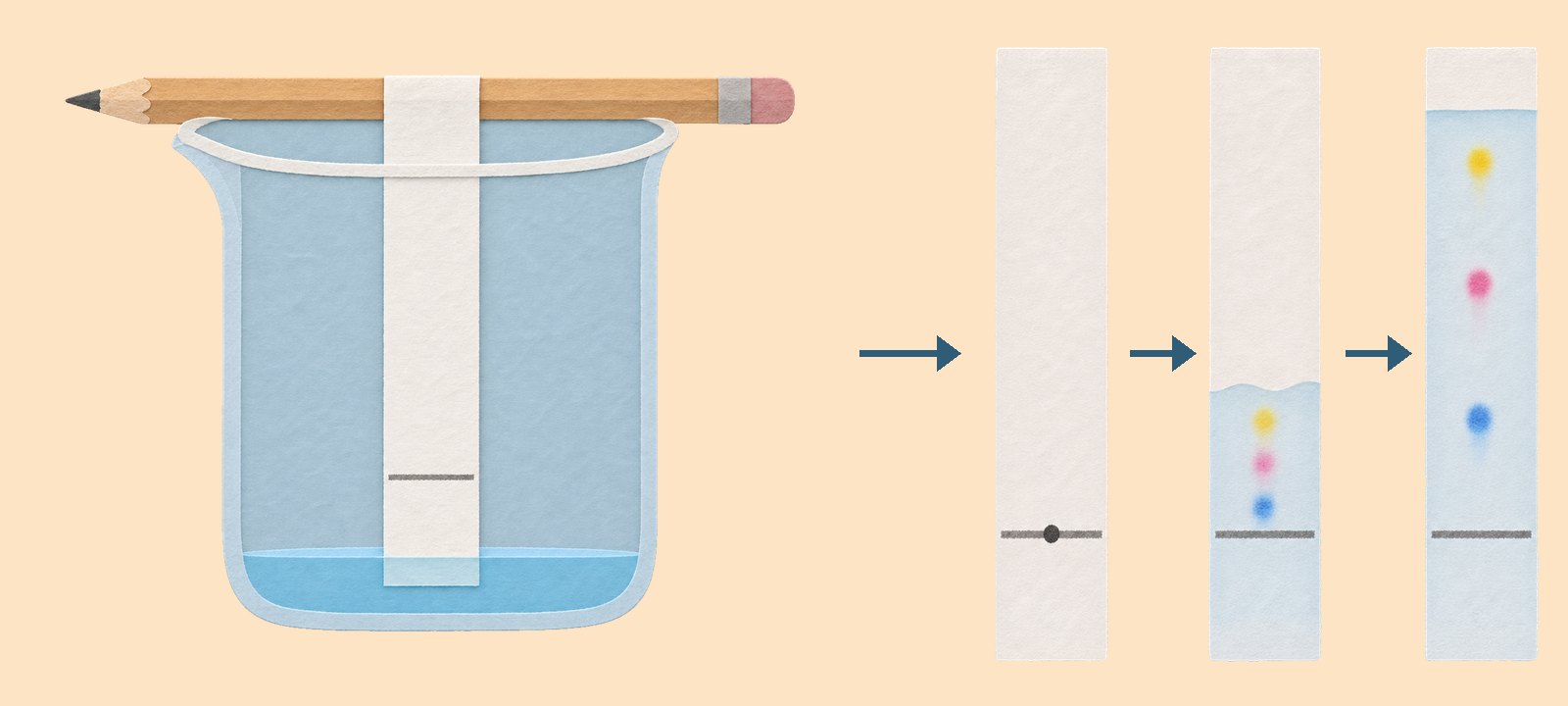
Quick check A pen's ink gives three separate spots. What does that tell you?
Choose the method
One question at a time. Tap the picture that shows the best method.
Not sure? Quick guide
- A solid that hasn't dissolved, in a liquid? → Filtration
- Two solids of different sizes? → Sieving
- Something dissolved, and you want the solid? → Evaporation
- Something dissolved, and you want the liquid? → Distillation
- Several dissolved colours? → Chromatography
Test yourself
Eight questions, marked instantly.
Explain it in your own words
Go further
Mission
Clean water for a village
TED-Ed: When is water safe to drink?
Plays from YouTube when you press play. Open on TED-Ed · TED Talk: How to make filthy water drinkable